Consumer Insights for Optimization of Industrial Systems: The Case of Consumers’ Greenwashing Perception in Adopting Single-Use Plastics Products in Padang City
Main Article Content
Keywords
Greenwashing, Green Marketing, Single-Use Plastics,, Industrial Optimization, Environmental Awareness, Consumer Behaviour
Abstract
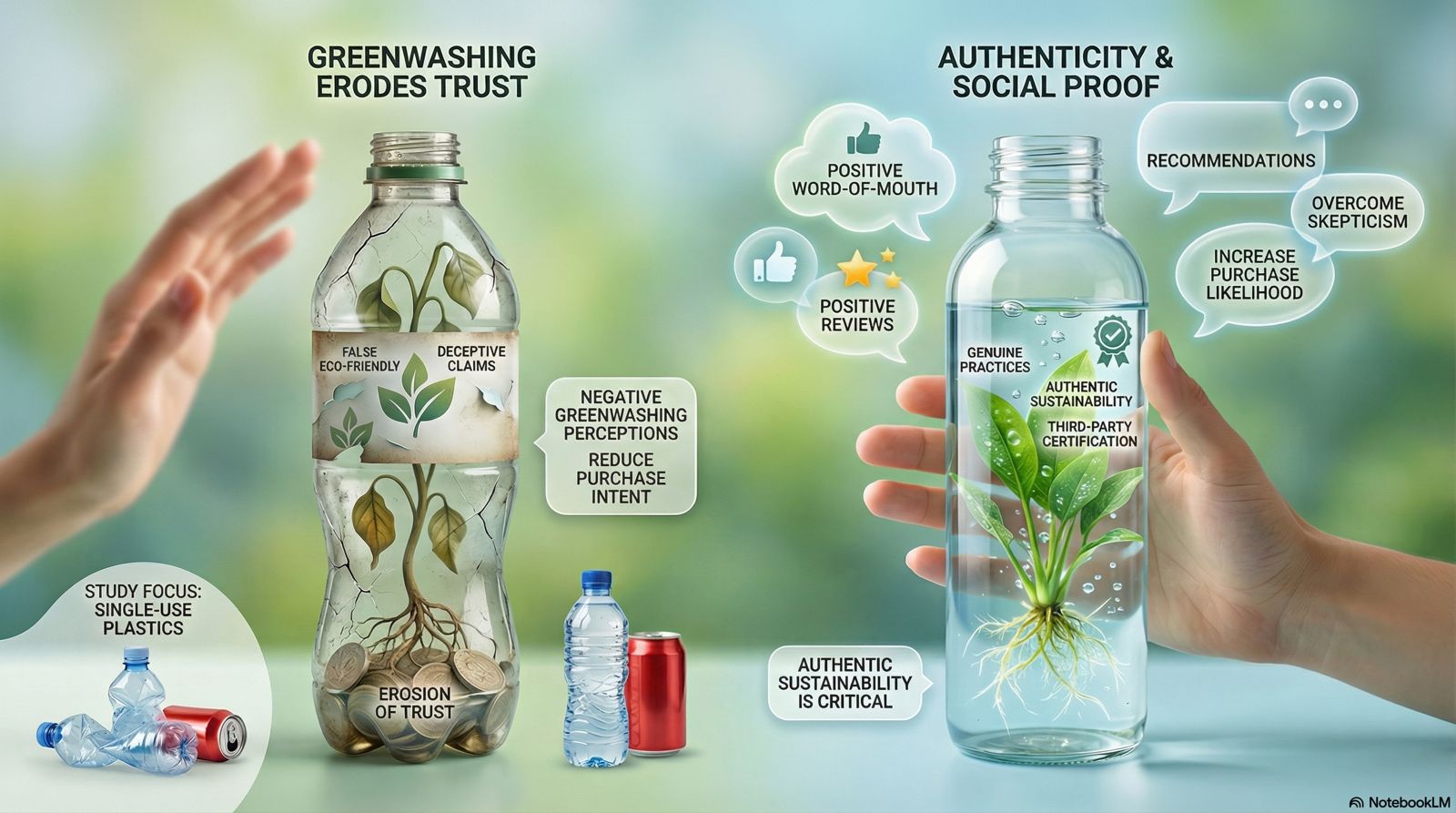
This study explicates the impact of consumer perceptions of greenwashing on the purchase intentions of single-use plastic products, specifically bottled still water and soft drinks, within the context of growing sustainability concerns. The objective is to understand how these perceptions influence consumer decisions and how the insights can inform the optimization of industrial practices related to packaging and marketing. Using a quantitative explanatory design, data was collected from no less than one hundred and sixty-eight respondents in Padang City through direct and online surveys. The sampling method is the Non-Probability Sampling method with a Purposive Sampling approach and it is directed to individuals who meet the following criteria: (1) minimum age of 17 years old; (2) domicile in Padang City; and (3) individuals or households who know bottled water and soft drinks brand. The data analysis, conducted via Structural Equation Modelling (SEM) using SmartPLS, reveals that negative perceptions of greenwashing significantly reduce purchase intentions. However, positive word-of-mouth can mitigate these effects, leading to a higher likelihood of purchase. The findings highlight the critical role of environmental awareness in shaping consumer behavior and suggest that companies should prioritize authentic sustainability practices which could be in terms of third-party certification to maintain consumer trust and optimize their product strategies. Companies are expected to be able to do business responsibly, by paying attention to the end-to-end production process that has minimal waste and minimal impact on the environment, through the development of more environmentally friendly products and optimization of waste management programs. Third-party certifications may be useful to support this effort.
Downloads
References
[2] U. Akturan, “How does greenwashing affect green branding equity and purchase intention? an empirical research. Marketing Intelligence and Planning, vol. 36, no. 7, 2018, pp. 809–824, https://doi.org/10.1108/MIP-12-2017-0339
[3] A.J. Mateo-Márquez, J.M. González-González, & C. Zamora-Ramírez, C. “An international empirical study of greenwashing and voluntary carbon disclosure”. Journal of Cleaner Production, vol. 363. 2022, https://doi.org/10.1016/j.jclepro.2022.132567
[4] M. Roszkowska-Menkes, “Greenwashing”. In S. Idowu, R. Schmidpeter, N. Capaldi, L. Zu, M. Del Baldo, & R. Abreu (Eds.), Encyclopedia of Sustainable Management Springer, 2021, https://doi.org/10.1007/978-3-030-02006-4_390-1
[5] J.W. Meyer & B. Rowan, B. (1977). Institutionalized organizations: Formal structure as myth and ceremony on JSTOR. American Journal of Sociology, vol. 83, no. 2, 1977, pp. 340–363.
[6] M.S. Mizruchi & L.C. Fein, “The social construction of organizational knowledge: A study of the uses of coercive, mimetic, and normative isomorphism”. Administrative Science Quarterly, vol. 44, no.4, pp. 653. https://doi.org/10.2307/2667051
[7] L. Zhang, D. Li, C. Cao, & S. Huang, “The influence of greenwashing perception on green purchasing intentions: The mediating role of green word-of-mouth and moderating role of green concern”. Journal of Cleaner Production, vol. 187, pp. 740–750. 2018. https://doi.org/10.1016/j.jclepro.2018.03.201
[8] J.F. Hair, J.J Risher, M. Sarstedt, and C.M. Ringle, C.M. "When to use and how to report the results of PLS-SEM", European Business Review, Vol. 31 No. 1, pp. 2-24. 2019. https://doi.org/10.1108/EBR-11-2018-0203
[9] B. Setiawan & A. Yosephani, A. “The linkage of Greenwashing Perception and Consumers’ Green Purchase Intention (A Case Study of Single-Use Water Bottled)”. Trijurnal, Vol. 22, No. 1, pp. 85-96, 2022.
[10] J.D. Newton, Y. Tsarenko, C. Ferraro, & S. Sands, S. “Environmental concern and environmental purchase intentions: The mediating role of learning strategy”. Journal of Business Research, vol. 68, no. 9, pp. 1974–1981. 2015. https://doi.org/10.1016/j.jbusres.2015.01.007
[11] Y. Sun, T. Li, & S. Wang, “I buy green products for my benefits or yours”: understanding consumers’ intention to purchase green products. Asia Pacific Journal of Marketing and Logistics, vol. 34 no. 8, 2022, 1721–1739. https://doi.org/10.1108/APJML-04-2021-0244
[12] Y. Sun & B. Shi, “Impact of Greenwashing Perception on Consumers’ Green Purchasing Intentions: A Moderated Mediation Model Sustainability” vol. 14, no. 19, 2022. https://doi.org/10.3390/su141912119
[13] B.G. da Silva, & F.R. Cé, “The effects of greenwashing on purchasing intention and perceived quality by the consumer. Revista Brasileira de Marketing – ReMarK, vol. 24 (Special Issues.), 2024, pp. 152-174. https://doi.org/10.5585/2025.26514
[14] E. Chandra & N. Novita, “Negative Marketing in The Softdrink Industry: The Effect of Greenwashing Perceptions on Purchase Intention Through Brand Image on Sprite”, Dinasti International Journal of Digital Business Management, vol. 5, no. 4, 2024, pp. 814-822, https://doi.org/10.38035/dijdbm.v5i5.2824
[15] X. Lu, T. Sheng, X. Zhou, C. Shen, & B. Fang, B. “How Does Young Consumers’ Greenwashing Perception Impact Their Green Purchase Intention in the Fast Fashion Industry? An Analysis from the Perspective of Perceived Risk Theory. Sustainability (Switzerland), vol. 14, no.20. 2022, https://doi.org/10.3390/su142013473
[16] J. Guerreiro & M. Pacheco, “How green trust, consumer brand engagement and green word-of-mouth mediate purchasing intentions”. Sustainability (Switzerland), vol. 13, no. 14, 2021, https://doi.org/10.3390/su13147877
[17] Román-Augusto, J. A., Garrido-Lecca-Vera, C., Lodeiros-Zubiria, M. L., & Mauricio-Andia, M. (2022). Green Marketing: Drivers in the Process of Buying Green Products—The Role of Green Satisfaction, Green Trust, Green WOM and Green Perceived Value. Sustainability (Switzerland), 14(17). https://doi.org/10.3390/su141710580
[18] Y.S. Chen, Y. S., Lin, C. L., & C.H. Chang, “The influence of greenwash on green word-of-mouth (green WOM): The mediation effects of green perceived quality and green satisfaction”. Quality and Quantity, vol. 48, no. 5, 2014, pp. 2411–2425. https://doi.org/10.1007/s11135-013-9898-1
[19] M.K. Ghassani, N.A. Rahman, T. Geraldine, & I.A. Murwani, “The Effect of Greenwashing, Green Word of Mouth, Green Trust and Attitude towards Green Products on Green Purchase Intention”. Budapest International Research and Critics Institute, Vol. 5 No 3. 2021, https://doi.org/10.33258/birci.v5i3.6598
[20] L.C. Leonidou, O. Kvasova, C.N. Leonidou, & S. Chari, S. “Business Unethicality as an Impediment to Consumer Trust: The Moderating Role of Demographic and Cultural Characteristics”. Journal of Business Ethics, vol. 12 no. 3, 2013, pp. 397–415. https://doi.org/10.1007/s10551-012-1267-9
[21] W. Zhuang, X. Luo, & M.U. Riaz, ‘On the Factors Influencing Green Purchase Intention: A Meta-Analysis Approach”. Frontiers in Psychology, vol. 12, 2021, https://doi.org/10.3389/fpsyg.2021.644020
Article Sidebar

Article Details

This work is licensed under a Creative Commons Attribution-NonCommercial-ShareAlike 4.0 International License.
Copyright Ownership
- Authors who publish their articles in Jurnal Optimasi Sistem Industri (JOSI) retain full copyright of their work.
- JOSI does not require authors to transfer their copyright to the journal or its publisher, Universitas Andalas. The authors grant JOSI a license for first publication.
All articles published in Jurnal Optimasi Sistem Industri (JOSI) are licensed under the Creative Commons Attribution-NonCommercial-ShareAlike 4.0 International (CC BY-NC-SA 4.0) license.
This means that users are free to:
- Share — copy and redistribute the material in any medium or format.
- Adapt — remix, transform, and build upon the material.
Under the following terms:
- Attribution (BY): You must give appropriate credit to the author(s) and JOSI as the original source of publication (including the article title, author(s) names, journal name, volume, issue, page numbers, year, and DOI), provide a link to the CC BY-NC-SA 4.0 license, and indicate if changes were made. You may do so in any reasonable manner, but not in any way that suggests the licensor endorses you or your use.
- NonCommercial (NC): You may not use the material for commercial purposes.
- ShareAlike (SA): If you remix, transform, or build upon the material, you must distribute your contributions under the same CC BY-NC-SA 4.0 license as the original.
A link to the full license text should also be provided: https://creativecommons.org/licenses/by-nc-sa/4.0/
Donard Games, Universitas Andalas
Professor in Entrepreneurship and Innovation
Niyanta Shetye, Brandenburg University of Technology Cottbus-Senftenberg
Chair Member in Environmental Law